The Ansar-Ud-Deen Society of Nigeria has called on the Federal Government to urgently implement people-centred policies to cushion the effects of the biting economic hardship Nigerians are grappling with.
The religious body urged leaders across the three tiers of government to prioritise interventions that directly impact ordinary citizens.
The National President of Ansar-Ud-Deen, Adeniji Kazeem, SAN, emphasised that while reforms are necessary, they must be implemented with a “human face.”
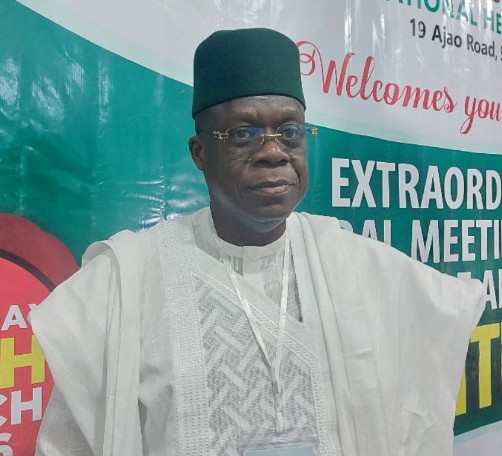
Addressing journalists on the sidelines of the society’s Extraordinary General Meeting held in Lagos on Thursday, Kazeem said that although policies introduced by the current administration are appreciated, they are having harsh effects on the common man.
He noted that the US-Iran war, which was affecting petrol prices and driving up the cost of essential goods, requires government intervention to cushion the effects on citizens.
“So, when these things happen, the government must also try to respond by helping people, even if it is on a short- or long-term basis,” he said.On his part, Ansar-Ud-Deen’s National Missioner, Sheikh Abdur-Rahman Ahmad, urged the government to adopt policies capable of easing the hardship faced by Nigerians.
“We advise the government to look into policies that will not aggravate the already bad situation of the majority of Nigerians, but policies that will alleviate their suffering, reduce inflation, increase employment opportunities, and ensure the security of lives and property,” he said.
On insecurity, Ahmad noted that while the country was not lacking ideas on how to address the challenge, effective implementation remained key.
He also expressed support for the government’s plan to decentralise policing as part of efforts to tackle insecurity.
“Right now, we support the efforts of the government to decentralise policing. We support state police and community policing, and we hope that these will improve security generally.
“But we expect the government to be more innovative in combating banditry and all of this because it does appear that bandits are getting bolder and much more daring. And there must be coordination—proper coordination, not competition—among security agencies,” he said.
Nigeria has faced worsening economic challenges in recent years, driven by rising inflation, high fuel prices, and increasing costs of basic goods and services.
Many households have struggled with declining purchasing power, prompting calls from civil society groups, religious organisations and labour unions for policies that prioritise citizens’ welfare.